
Diario Scolastico
One staple of the Italian schools was the diario scolastico, a daily planner of sorts. Its primary purpose was to record your daily homework, which was quite abundant. In the younger elementary grades, your teacher would dictate the homework word-for-word, after we wrote down the date. For example: solve the math problems on pages 23-27. Write ten sentences in the (insert grammatical tense). Sometimes, she would check your diary after dictating. Often, your parent (or guardian) had to sign the relevant page in the diario to confirm you had done your homework. The diario was very serious and official.
Once we reached middle school, the diario scolastico was a whole other experience. Publishers competed to produce the most enticing planner, featuring themes from TV shows or beloved comics such as Mafalda. There was a famous planner called Smemoranda, or Smemo for short, that started the trend of fun diari scolastici. It had a yearly theme, and well-known writers and other personalities would share quotes or thoughts to be included in it. It contained comics, horoscopes, stickers, jokes, and more. Entire industries grew around the diario scolastico.
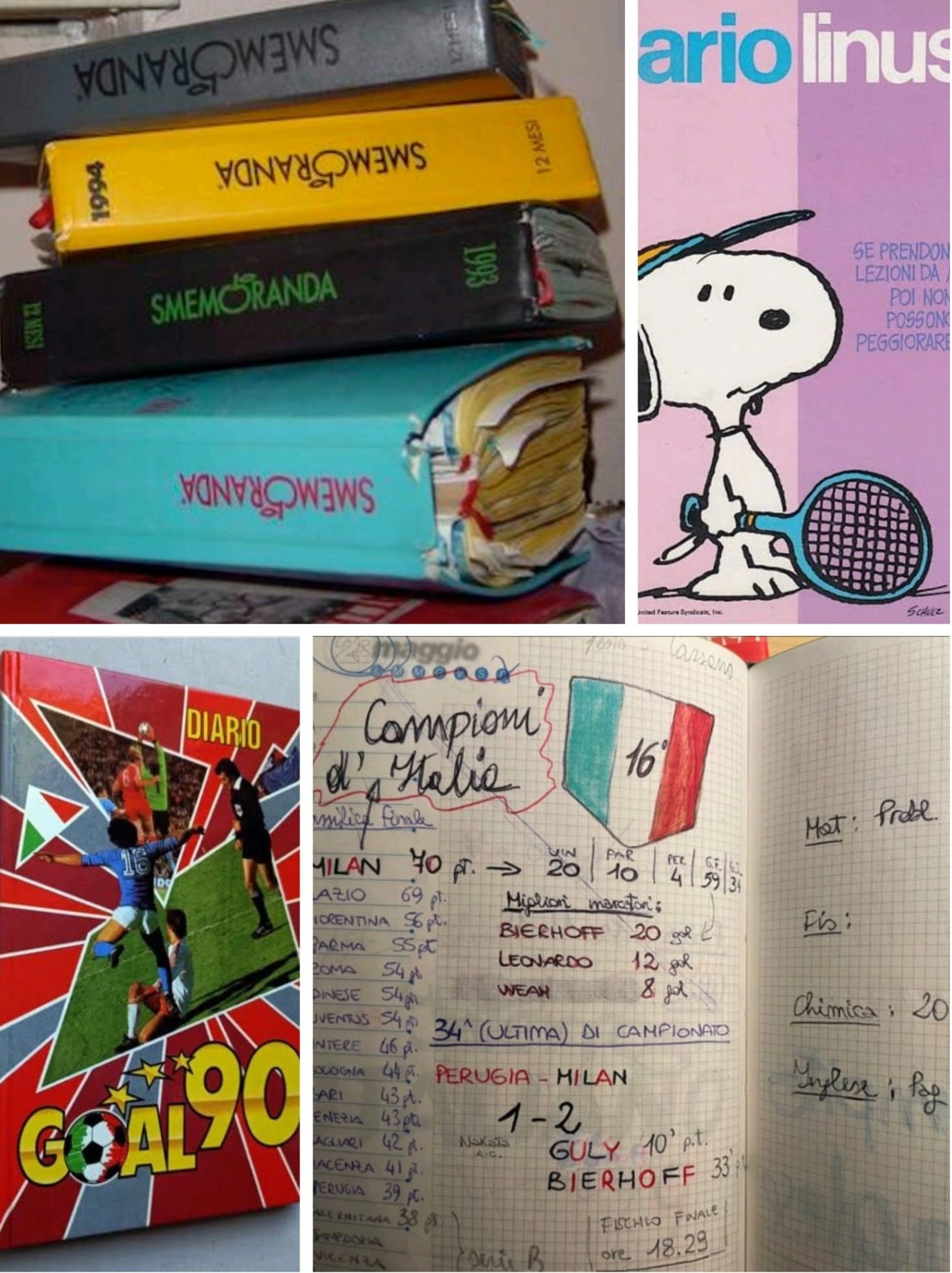
Most importantly, the diario was great for doodling or for passing notes in class. Your friend could write a note about your friendship (Italians are very effusive) or comment on the lesson (Uffa!). Gossip was shared, too, which meant you could not show your diario to just anyone. Your deskmate might write a phrase in large bubble letters and color it in while the teacher droned on and on. You might glue souvenirs from school trips onto a page, or even a bus ticket. This was our smartphone, our social media.
The diario you brought on the first day of school served as a status symbol of sorts, like the coveted Invicta backpack: Did you buy your school supplies at the cartoleria or a cheaper place? Did your diario have a popular theme or was it simple and utilitarian? If you purchased your school supplies at Standa (a small department store) or a random warehouse-type store, you were not going to be one of the lucky students. That’s just the way it was in middle school.
If you had a fancy diario, chances are you would show up in a new Barbour coat come winter. Maybe, when your classmate inquired about your new shoes, you would say: “My mother told me not to tell anyone where we bought them” (true story), and another wealthy classmate would snicker and say, “Oh, that means you bought them at xyz store!”” But we were mostly all friends, and so it went.